Leadership communication isn’t just about having a message.
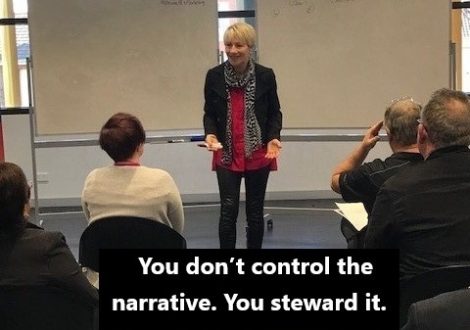
It’s about stewarding the narrative that forms around your leadership and your organisation over time.
When leaders don’t actively steward the narrative, others step in to fill the void.
Some symptoms when narrative stewardship is absent:
- messages are technically sound but devoid of meaning
- organisations are constantly reacting, correcting or defending
- meaning is shaped by the media, social commentary or internal chatter
- employees can’t link their work to a higher societal purpose
- customers don’t understand what you stand for
This is where narrative stewardship diverges from other traditional leadership communication.
Traditional approaches focus on:
- key messages and talking points
- announcements and updates
- reactive reputation management
- being ‘on message’
Narrative stewardship operates at a different level altogether.
It’s the disciplined communication practice of consciously shaping and sustaining shared meaning over time.
Narrative stewardship isn’t about spin. It’s about forging identity, building trust and fostering belonging by aligning purpose, vision and values across stories, behaviour and culture.
In an era of declining trust, information overload and constant scrutiny, the most effective leaders will make these subtle but critical communication shifts:
- from reacting to guiding
- from explaining to sense-making
- from one-off messages to coherent narrative arcs
- from positional authority to earned narrative authority
So, here’s two questions worth reflecting on:
- Who is currently shaping the narrative about your leadership or organisation?
- And is it happening by design or by default?
Leaders are no longer just stewards of strategy, operations and resources; they’re stewards of trust, truth and meaning.
Narrative stewardship is where leadership communication becomes truly transformational.
©Ros Weadman 2026